16 May 2016

Small (sic) beginnings

I love my pigs.

From the time a neighbour presented me with Pickles and Pork, and the subsequent days of raising Piggylet, the piggery has grown at its own peaceful pace, with a number of slaughterings in between, to the respectable number of two breeding boars and 7 breeding sows, most of which are raising piglets at the moment.   Suddenly last week I woke up to the fact that toting up the newbies, we now have about 60 pigs! At the moment most of them are diminutive but they don't stay that way for long...

This is what piggylet grew into...


Meet the new juvenile delinquents...


When peering over their enclosure one is met with the straight inquisitive stares of 36 eyes and 36 cocked ears, 18 sniffling snouts and questioning grunts -


An attentive mommy with spotty kids!
Pigs have different personalities.   In two weeks this is the closest glimpse I have had of this sow's piglets, and I'm left guessing as to how many she dilligently hides from me in the grass.   And then she gives me the eye....

Yet her nextdoor neighbour is so relaxed, lying off to the side in the sun while the little ones are feeling a bit of sun on their bodies for the first time too...


There is a saying, "breeding like rabbits".   Whoever coined that idiom didn't know pigs...

29 March 2016

The blur that is the supermarket...

I have come to realise that supermarket shopping for me has become a blur - I honestly couldn't tell you everything that you can find on those shelves anymore. I used to enter and go straight for the cheese, 1st straight aisle right, which is no longer necessary now that I get our own Fairview and Daleview selections, see website. And I use my own kefir instead of cottage cheese and I'm planning to progress to making our own mozarella and feta (as soon as I have grown more arms). Next stop is fruit and veg. Or shall I just say fruit, because I don't have to buy veg. Then I head for the far left corner, oblivious to whatever else I'm passing, in order to get to the meat counter. Then straight across for milk if I run short of the unpasteurised I get on a Thursday and because it doesn't last long enough. No more yogurt and butter purchases for me now that I make my own, then to the far right hand side of the shop for cleaning stuff and up the second-last aisle from where it is easy to spot the shortest till line. While traversing the front I can grab some tea, coffee or toiletries if needed. And that's me done!

So why am I telling you this mundane personal anecdote? It is because I am so happy I am free to allow the rest of the supermarket to pass by me in a blur of nothingness. I just watched a documentary this week called 'Fed Up', and the conversation is headed up by Bill Clinton at the behest of a live-wire lady whose name I forget, and its about the obesity epidemic that has hit the USA. The information I gleaned from this doccie is too much to include in one volcanic effort to you, but the supermarket is a good start. Produce is preferably not sold in its original form any longer, because if it has been value-added (read deconstructed, processed, and sugar added) it sells for so much more. And if one can claim 'just add' something or another and sit down and eat, your overworked mother/housewife/working lady is happy to grab and go, if it means she doesn't have to peel veg and slave to put dinner on the table. It's just that if anyone took the time to tell her the price she is paying is her health and the health of her family, with medical bills added, I bet more than 90% would be just too happy to rather go to the farmer's market and cook their own darn dinner!

Just a few stats which raised the alarm bells for me once again: Of 600,000 items available on supermarket shelves in the USA 80% have sugar added. They tell you 'with half the fat' or 'half the calories' (compared to what?) and while making the comparison, they don't tell you they never reduced the sugar as well, because the sugar barons have succeeded in labelling to simply contain 'sugar' in the list of ingredients, without stating how much, which is mandatory for everything else. And then they furthermore disguise the s-word by calling it fructose, glucose, lactose, dextrose and a myriad others which I can't even remember. Research furthermore shows that all the fake-sugar sweeteners have exactly the same effect on the endocrine system as if it was refined sugar you are ingesting!

The second alarm bell raised for me is what they've done to grains. Everything is sugar coated, the cereal boxes have action men and popular tv characters on and in and efforts to stop them advertising to children have been met with cries of interference with freedom of speech... but what I didn't know is that the metabolic effect of a processed grain is exactly the same on the body as when ingesting refined sugar. Even if you astutely eat your sugar-free kelloggs with just milk, there's no health benefit. In the words of the nutritionist-doctor interviewed: "Whether you eat your weetbix or whatever it was he called it, without sugar or you eat a bowl of sugar without the weetbix the effect to your metabolism is identical and the metabolic diseases resulting from the intake of processed foods and sugar are Diabetes, Heart disease, Lipid problems, Strokes and Cancer (there were more) because they all cause an overproduction of insulin.

The overproduction of insulin makes you think you're hungry because it blocks the brain from receiving the 'full' impulse. And most notably diabetes caused by an overindulgence of sugar and fine processed carbs is no longer called 'Adult onset' diabetes, it is now just referred to as Type 2 diabetes, because it is ocurring in teenagers and even in children as young as 9 years of age.

This is the one doctor's mantra, which I shall repeat in the weeks to come, while I write more about nutrition and the scourge of our age which is processed food:


Detox on food which looks like it came from nature as opposed to a box or a can with a list of ingredients printed on the outside.

21 March 2016

The thing about nutrition ...

I am having a total mindshift, over a period of years and counting, about what constitutes proper nutrition. I can't help but remember our ancient forebears who didn't have the knowledge and access to the variety of foods we eat, yet they lived, farmed, married, had children and fought wars ... with their bare hands so to speak.

I am becoming more and more convinced that what one can get from the land around or near you, as fresh and as little travelled as possible, without the involvement of chemicals of any description, is good and satisfying and nutritious enough to keep one in good health. It isn't the variety that's available to eat that feeds us better - proteins, sugars, vitamins and minerals are widely present in all manner of produce. The crux is whether the produce is fresh, not through treatment and refrigeration, but rather through recent removal from its position of growth, and whether the meat is from an animal that lived well and was treated with kindness and respect. That's a big mouthful and begs reams of articles I know....

But take the Christmas lima beans of which I only have a precious few packets on offer this week... I can be far from home in the lands and feeling woozy and hungry, and if I shell two of those pods and eat the 4 or 5 beans inside, I feel fed and satisfied and can keep going for hours again, sometimes all the way to dinnertime. At other times it may be ordinary green beans or peas, or a carrot pulled from the ground, the effect is always satisfaction, and hunger that stays away for hours. That's got to tell you something about nutritional density. We have become so used to eating heaps of food before feeling well fed, and we confuse the full feeling with a fed feeling. That is because manufacturers have to be so careful what they supply us with especially when it comes to fast foods, that the bulk of the food has little or no nutritional value so even if we eat our fill, our bodies are still telling us it needs something more.

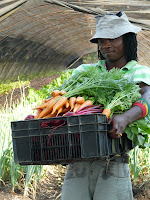
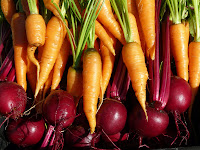
Its no wonder people from ages past could go on long journeys with just their sourdough bread in a sack, which although it gets hard it doesn't grow mould, and cheese which was possibly quite hard and strong, and then they lived off the land, foraging along the way, because a little handful goes a very long way... By the way there's a few bunches of heirloom carrots the monkeys have spared us so far... they are more earthy in taste, and pretty on your plate!

I am starting to spend less time cooking and more time foraging... and thinking of how I can help my customers have the same benefits I have - bringing the farm and farmhouse kitchen to you through www.farminabox.co.za! Just click to see what is on offer this week.


And I am grateful for technology which allows me to write this on a laptop sitting in the kitchen watching many litres of cream churning to become fresh butter - I had to tell my kids last week to buy their own because I had sold everything I had. They were not so miffed about having to buy, as about not being able to enjoy the fresh farm taste of the farm butter! Mindful of baking and babies, I have added unsalted butter to the list, and some with garden-fresh herbs added.

29 February 2016

A yogurt story

Many years ago when I had my first baby who was born in winter, we had a wonderful first year because she was raised on mother's milk only for at least six months.   But when her first birthday rolled around and it was winter again, she developed a very hot, very uncomfortable cheek which I found out was dry eczema.   I was given an atrociously expensive cream to apply to the cheek, for three days only, because it contained cortisone.   Of course the condition disappeared as if by magic yet not two weeks later it flared up again.   I was instructed to use the cream again.   And again and again as the condition kept flaring up time after time.

I then read a book by Adelle Davis called 'Let's have healthy children' and in it she advocates giving the child real yogurt and Vitamin A.   I could not conceive of how to feed a one-year old Vitamin A but I got the real yogurt, mashed banana into it and sweetened it (bless my naive heart) with sugar.   Not only did the baby love the stuff, it cleared that eczema in three weeks flat.   

Eventually she was eating a whole lot of other foodstuffs and the yogurt was relegated to the back shelf.   The winter her second birthday rolled by the cheek was getting hot and red again so I quickly started the yogurt regime again and this time the condition disappeared forever.   So to speak, since she is now heading for her 38th birthday this year.

I didn't even know at the time what the nutritional benefit was of the yogurt, which I do now, I just knew it was the wonder-working thing that saved my child's complexion.   Today I know that naturally fermented foods are probiotic.   And probiotics are what the intestine needs in order for the body to retain 80% immune-efficiency.   That's right.   The digestive systems controls 80% of the body's immunity, which majorly impacts on the overall health of the body.   Probiotics have been cited as a hedge against immune-deficiency diseases such as Chrohn's, IBS, MS, Lupus, and a host of others.   Once the disease is present it may not be possible to cure through the ingestion of probiotic foods but it will act as a hedge in healthy individuals and also lead to improvement in the daily function of people suffering from these diseases.   Here I also wish to quote another book I read in later years, called 'The maker's diet' in which Dr Jordan Rubin describes his recovery from Chrohn's disease, which until then had been considered a terminal condition.

Because the function is so large, the healing of the intestine has been cited as a mood enhancing process which aids brain function and concentration and relief for sufferers of ADD, ADHD and even Autism.   

So what are probiotics one might enquire, and how does one acquire them in food?   Firstly, eating organically grown food fresh and raw without peeling, is a good way of ingesting the bacteria and other microbes that are compatible with those present in the digestive system, which strengthens them.   Secondly, eating and drinking naturally fermented foods such as Kombucha, natural yogurt without flavourants and preservatives added, kefir and kefir cheese, sauerkraut, riesentraube and other fresh vegetables naturally fermented, gherkins naturally fermented instead of bottled with vinegar and taste enhancers, most notably sugar, and many others which I haven't even investigated yet.  

But since this was just a yogurt story I will keep the information on the rest for another day, another blog..

Here's to gut health!

2 February 2016

I floated a website...

In January this year, 2016, my website for selling my farm produce went online.   To say that it took me two years to get to that point is not an exaggeration.   What you see is not all there is, it is the tip of the iceberg.   I took photographs during every season, researched masses of recipes and nutritional benefits of the produce, and populated a not-so-simple template for a website that I can use for orders online and it took months of hard graft.   Everything is not available all the time so that most of what is there is not visible until I enable it when the appropriate time comes for bringing it online.

All this blurb is just to say, don't wonder why I haven't been blogging.   And the other sentiment is, although there were so many times I decided it was all too much work for nothing, those hours are paying off now because next time a broccoli head pops into view, I can just go to the website, enable it and voila, it is available in all its glory, picture, description, recipe's and nutritional info all at once!

Check it out (orders only get delivered to Barberton, Nelspruit and White River, sorry!) but it is still interesting and useful for anyone in the mood to cook their own dinner!   More about this as we go...

www.farminabox.co.za

1 January 2016

Farm in a box website

http://www.farminabox.co.za/

If you live in Barberton, Nelspruit or White River, Mpumalanga RSA, you can share in the goodness of my organically grown produce and authentic farmhouse fare by clicking on the link above and placing your order there...

16 January 2015

The real initiation of the pond

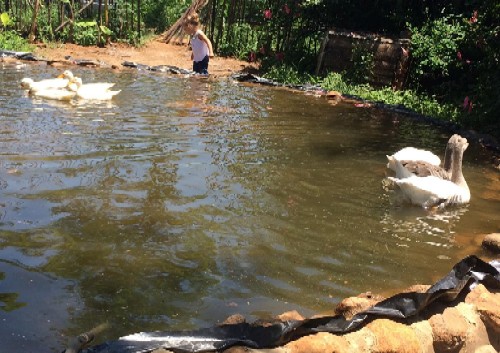
Finally after the little girls had had their swim, it was the turn of the ducks and the geese to be introduced to their pond.   They took to it like ... well, need I say it?

Enter Iliah - prepare to be amused, she wants to catch a duck!
    Iliah in hot pursuit
 
They about face and so does she
And again... darn ducks!                  
When she decides to go in the geese go on the offensive and I have to run to the rescue!

Just another terrible day at the office for me :)


13 January 2015

You may surmise this story is not about ducks and geese


... because what you see in the picture are turkeys and chickens?


Wrong. The story is not about the turkeys and the chickens, it is about the abandoned dam floor they are standing on. I always had designs on that old floor and when someone gave me some ducks and geese, I knew exactly what the floor was going to be - a pond!


We built the sides up with natural rock, with a pipe and tap inserted on floor level one side for emptying it out when dirty, then we lined it with plastic and built another layer of 'wall' with natural rock before cutting away the excess plastic, and voila!   A pond!


Of course the granddaughters had to do the tour of inspection first...   Notice how the clothes get less as the story unfolds...


                    Discovering clouds of tadpoles


Khairein decides she is having NONE of that!

So much fun and wonderment!   The ducks and geese had to wait until the next day.


22 September 2014

Keeping bees in Mpumalanga SA

So.   Keeping bees in Mpumalanga SA is fraught with issues we didn't know of before we started.

First we had a few hives inside our rather extensive yard but when the grandchildren started coming along we decided to move them to other areas on the farm.   Fortunately we had spotted some badgers before we did the move, so we knew we were going to have to make it badger friendly.   What we didn't know was badgers was going to prove to be the least of our problems.

Here FJ is clearing land for establishing the hives.   As soon as he started the loader each morning he was joined by two fork-tailed drongos that flitted and chirped impatiently for him to start churning up the soil so that they could go after prey on the ground or on the wing.   I was on the loader with him when the project was nearing completion one day and heard him telling them to wait, he was going to get to their favourite spot soon ...

I asked whether it was customary for him to have conversations with the birds and he frowned and said "Yes of course.   When that's all you've got for hours on end..."   as if it made perfect sense to him...


When the land had been levelled we planted single poles to make it difficult for the badgers to reach, for fixing the hives to.


Someone we knew who used to do beekeeping with his sons was giving it up because the sons were going to university, so we bought all of his used hives and equipment, and set up our wonderful new apiary.

We planted flowering trees and plants and within weeks the first hives were populated.   Unfortunately there is a real unemployment problem among people living in the area and no sooner was there honey, than the trouble started.   We never considered the fact that people would brave African (killer) bees without the necessary smoker and protective wear, but they do.   And we have never harvested a gram of our own honey from this apiary.   

What is needed is a tall pole with a solar panel and alarm system, and a fence to keep animals out, so that when people move into the area we will be alerted by the alarm to take action...   Sigh.   We love our country but it is hard to have to consider security before one can do anything whatsoever always.


3 February 2014

Animal, vegetable, miracle

is the most inspirational book I have read in a long time.   Author Barbara Kingsolver has been a favourite since I first read The Poisonwood Bible yonks ago, but who knew?   She is also a consumer with a conscience!   I almost feel as if she should be classed as a non-consumer, having read how they as a family pledged utter self-sustainability for the period of a full year, and the delightful results of said pledge.  

After six months of non-blogging I have been driven to my computer to continue blogging, if that will make a difference to anyone's life who may come across the articles and read them (all the future ones I now have in mind especially!)

I am sure that having come that far, living off the land and by one's own means for a full calendar year, it becomes second nature not to look to supermarket shelves for sustenance anymore, because whatever you are looking at has been grown from hybridised or GM seed, so that it will outlast transportation and the inordinate time spent in packing sheds being washed and handled, and on supermarket shelves, with little regard for taste.   And then it has either been processed, transformed into something different and sometimes unrecognisable (try chocolate coated olives!) transported 100,000 miles, radiated or otherwise preserved, with even less regard for nutritional value than taste.   Having tasted one's own produce, grown from honest seed which is true to how that food looked and tasted 100 years back, and having experienced the energy boost from ingesting such food, and the obvious health benefits, there is no going back.

What am I saying?   I am now more than ever convinced it is the right thing to source and grow heirloom type vegetables, I am looking forward to this year of change, and of growing the old so that it seems brand new...

4 July 2013

We breed owls. Barn owls. Not really, no...

But it feels as if we do.   When we first moved here we realised there was a nest in the roof over the verandah, which has a knotty-pine ceiling.   Some planks had rotted and fallen out near the gutter and that was where they gained access.

We hate rats and love owls, so the arrangement suits us well.

Then they moved away and weren't seen again for a few years and we thought we had somehow offended them, but not so.   Possibly one of the pair was killed or perhaps the owls that subsequently moved in were from a later generation, I don't know.   What I do know is that we haven't been without owls for most of the past five years, and a new clutch of four to five fledglings leave that nest every six to nine months on average.   That's a lot of owls.   We must be keeping the valley and surrounding mountains well stocked.

It is totally delightful when the young ones fledge, because they emerge not knowing where to go, what to do, or what they are looking at.   Sometimes they gently drift down to the ground like a falling leaf.   Seen here, they often alight on a window sill, and then take on threatening stances when approached from the inside.

This one started swaying from side to side, as if to say "bring it on..."


We spend a lot of time on the verandah or at the fireplace outside in the evenings, when we are privy to the antics of the new fledglings.   What makes it especially delightful is that the barn owl mom starts incubating the eggs as soon as she had lain the first one, although she may lay another four or five eggs over the two weeks following.   As soon as the first one has hatched there is increased activity as the parents take turns all night long hunting and bringing in rats for the growing family to devour.   They   hatch one after the other, with a few days in between.   As long as the food keeps coming all the chicks grow up in perfect harmony with one another.   The result is that we have a new fledgling emerging from the roof every few days for up to two weeks at a time, giving us a lot of viewing pleasure.

Because he smokes Jamie sits on the verandah in the evenings watching series on his laptop or engaging in other activities which he can do outside.   Because of this habit he has had the pleasure of getting up close and personal with the young owls on many an occasion.   One evening one alighted on the sofa next to him and turned its little swivel head to take a good look, quizzically swaying its head from side to side as owls do.   Jamie involuntarily started to chuckle, which made the little head move from side much quicker and the more Jamie chuckled the quicker the movements became and then the owlet decided it was possibly best to leave.

The other evening he had the closest encounter yet when sitting with his feet crossed on the coffee table.   The young owl dropped from the roof, spread its wings and gently flew towards him alighting on his toe.   Fortunately it is winter and he was wearing closed shoes because those talons are like razor blades!   (Spoken like one who has had the misfortune of close contact once).   Before he could swing his cellphone/camera into action though it sort of lost its grip and flapped a few meters away to the chairs (upended at night to discourage the dogs).


... when life exists not so much in breathing but in those moments that take your breath away ...

2 July 2013

What I have learned about keeping rabbits you won't find in a book or on the internet.

What I found on the internet was a very informative and happy account of how wonderful it is to keep rabbits, how they produce 6 x the kilo's in a 2m2 hutch than cows on 1 acre of land, how much easier and relatively cheaper it is to produce this meat, and how they don't smell...   The latter fact was where it all fell down from the get-go.

Kept in welded steel cages (read batteries) such as one is 'supposed to do' to keep it 'practical' and 'commercially viable', they stink.   There is not a suitable euphemism for the phenomenon.   We cleaned the trays, we fed and watered them, we fed them green stuff and not just pellets.   They stank.   And the little ones died like flies.   I'm sure there are 'factories' which is what the article called them which work well.   Huge structures where the rabbits never see sunshine or feel the wind blow, that are super-controlled and not to make the author out to be a liar, perhaps they don't smell.   Perhaps they have systems in place because the business is big enough, to ensure total cleanliness, no smell and perfect record-keeping which I believe is necessary and where I fell down because I simply don't have all day to stand and watch when a buck has been brought to a doe to know when exactly "it" happened with the result I probably left them together too long just to be sure.   Also being semi out of doors there were other factors, eg rats running over the cages at night freaking out the rabbits.

Perhaps I didn't have the ultimate perfect cages, because the rabbits always sat in their food bowls and defecated there, and for some reason urinated in their water bowls.   The ideal would have been to have had those little water spouts where they have to put their mouth over to get the water out, rather than open water, but I just couldn't find them straightaway when I needed them.

I don't know whether they feel happiness or not but those rabbits didn't seem happy to me.   Perhaps it was just me being unhappy for caging them so but the point is it was not working and the babies kept dying, most of a litter being dead within three to four days.   I decided they had to get out of the cages.   So I took them into a facility with a cement floor where they couldn't dig and gave them wooden hutches placed far apart to crawl into that would be nice and dark, cosy for moms with babes.   The does were all together in a large room and the buck in a smaller room adjacent.   My totally unprofessional method would be to open up between the two rooms for a week or so, and then separate them again until all the does had dropped and weaned their litters, when the young ones would be removed and the process started again.

It seemed to work well, until one morning there was a dead doe on the floor with some fairly large pups lying dead as well.   I asked a helper to reach into the hutch and see if there were any live ones left, and all he felt was a snake.   A very large snake, none other than a black mamba which proceeded to emerge from the hutch hopping mad and with tell-tale bumps where the rest of the little ones had been swallowed.   We killed and measured it, more than 3m in length.  

This happened on three different occasions, each snake being between 3 and 4m long, and try as we might we simply could not stop every last hole in that shed, the snakes always found one we had missed.   Or they came armed with their own wire cutters and hammer and chisel, I don't know.   We lost about 30 rabbits big and small to those mamba, which was substantial given that we only had four buck and about six doe to start with when we moved them there.   They were breeding successfully, but the snake issue was a huge one.   It was simply too dangerous for us humans, let alone the losses in does and pups we were experiencing.

I drew on the experience I gained as a young mother, keeping rabbits for pets for FJ and his sister when they were little.   We dug around the perimeter of the new cage 1m deep and placed concrete blocks close together in the trenches.   Each rabbit was going to have at least 2m2 with the trays from the original cages to serve as a roof where they could hide from rain.   They were going to be able to dig their burrows and do their ablutions in or on the ground, and make their own nurseries underground such as rabbits do.   The difference was the pets were all kept together, and here I was going to separate the rabbits inside their own smaller enclosures.   Double gates and bird netting see to it that no rat and no snake gets in there.

I'm happy to say they have been in this new facility since November and I haven't had to clean it once.   It does not smell of anything and yes, even if it is perhaps my imagination, I swear they look happy!   Moreover, they are doing what rabbits do best...


 Let the pictures tell the story.   These three pics were taken around Christmas...
And these were taken last week...


I have just finished a new facility along the same lines so this is the last day they will all be together - we don't want to hear complaints about overcrowding now do we?

A pumpkin story to keep me humble ..

.. happened when two years back I decided to plant pumpkins right alongside the house to keep an eye out for the monkeys which made it impossible where I had them before.   I was so in love with my pumpkin patch I couldn't stop taking pictures of it.


The leaves became like the seat of a chair so big, and eventually one couldn't see these stakes, the plants were so huge... but I didn't take a picture then because I was devastated...   Not a single pumpkin was developing on it...


Last year on the other hand, I decided to make camps in the chicken enclosure because they had decimated the entire camp although it was way bigger than the prescription for free range chickens.   The camps they didn't have access to quickly recovered and seeds left there from our kitchen scraps developed in the loose soil where they had also left their droppings which fed the soil.   This is half the crop of pumpkins we harvested there, where we hadn't cleared, hadn't planted, hadn't driven stakes into, hadn't done anything whatsoever to deserve the harvest ...

I think there's a lesson hiding in this tale somewhere....

I always believed that I couldn't grow vegetables.

Having been a successful grower of ornamental plants for many years, I had been unsuccessful with vegetables most of my life.   Some years back a neighbour's pensioned father worked here at the farm, and seeing my dismal attempt at growing a few veggies offered to do it for me, which task I gladly relinquished.   I observed what he did, and then the penny dropped.   He majored on compost.   Well-aged horse manure (any other would also do) was mixed into heaps of broken down humus found in the compost heaps on the farm.

It isn't so much that I didn't know that, or that I hadn't tried it... it was the copious amounts of the stuff that he used.   And the age.   Everything had been aged very well.   The mix was placed mostly above the level of the soil, and watered and planted.   Our annual rainfall is high, so in areas with less rainfall and especially sandy soil, building the beds up so would probably be counter-productive.

The veggies grew and the harvest came, and then so did the diseases and insects and that was when we crossed swords.   My pensioned helper didn't care how poisonous a substance was, and whether I even knew he had sprayed it on food I might harvest that weekend or not, as long as his veggies looked stunning he was happy.   My stomach turned and I became very suspicious of everything, not wanting to poison myself and my family.   We had many arguments and he disdainfully dismissed my notion of wanting my veggies to be chemical free.   It led to the parting of the ways, but I had learned.   Lots and lots and lots of organic material.   Therein lies the success of growing vegetables, and the phrase 'organic vegetables' jumped to mind.   I had an epiphany, the first of many:   The concept rises and falls on the strata they are planted in.
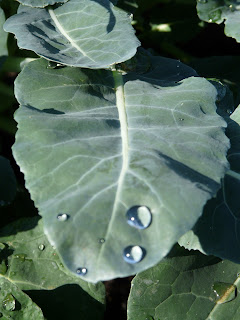


I abandoned the tainted plot and moved the vegetable project into a tunnel that had housed plants before, and where nothing had been planted in the ground.   The luxury market of ornamental plants was failing to deliver and we needed to diversify.   Tractor loads of compost was brought in and beds built up above soil level.   The structure of the soil itself had been compromised with compacting feet and heavy plants for years
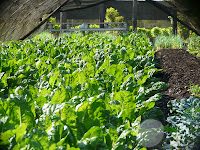
so I had no confidence in it, preferring to raise the beds above it.   The first seedlings went inand in spite of a number of prophets of doom, we had a measure of success.   When disease hit, if I didn't have an organically sound manner of dealing with it, the plants were removed and discarded, the beds rebuilt and fresh  seedlings planted.
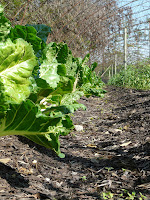
The second year it seemed as if the plants grew better and were more resistant to disease.   We had also physically dug up and eliminated cutworm in such large numbers they seemed to have been beaten, with a little resurgence now and again.   This didn't go down without losses, because it is only when you see a plant lying flat on the ground with no roots, that you know the cutworm is there.   Checking the beds first thing in the morning became the norm, because that is when you catch them just there, resting after their meal.

We started selling at a monthly farmer's market,

and also boxes of fresh veg to our home town of Barberton.    We called it Farm-in-a-box.
By the third year I knew it was not my imagination.   The vegetables just kept on improving, growing bigger and better, and more naturally disease resistant.   The soil had been conditioned over and over again without the digging and subsequent damage to the structure.   The more I planted the more I learned.   Not only are there earthworms that aerate the soil, that we all know exist where organic practices are observed.   There are also micro-organisms that tunnel around, making it possible for the little hair roots of the plants to follow where they have dug, all of which comes to naught if the soil is turned and dug over, let alone ploughed (my personal bugbear).

During the three years we were doing our trials and selling good vegetables already, we had a kindly rep from a chemical company regularly paying us visits and trying to convince us that if the container says you can safely eat the vegetables after such and such a number of days, it meant there was no residue of that chemical left on that plant after that time, or it was so insignificant it made no difference and would certainly not poison anyone ingesting it.   We didn't bite - pun unintended.

FJ found our rep standing at the entrance to a tunnel the one day, just looking.   When they had greeted, he said to FJ:   "You know son, I have been growing vegetables for 30 years in this valley, but I tell you the truth, I have never grown vegetables this good in all that time."

He hasn't been back.


Friends at last

Given my dog Varkie's run-in with the bush pigs last month, I have been very wary of him coming in contact with little miss piggy.   Varkie sleeps under my kitchen table at night and whenever I bring piglet out to sit with me at the TV he gets very excited but I won't have him getting excited around us, not knowing what that excitement can escalate to.

Well I finally decided to trust him, with excellent results ...

First meeting

The next pic was of him rolling over to allow her to sniff him all over, but the movement was too much for the picture to be any good...


 Driving him ever closer to his bed...

She then proceeded to the table where his bed is and he quickly took on a defensive position but at no stage did he seem aggressive 
 Is he going to allow her...?

 YES!!!

I am a proud mom.   My dog who I call Varkie (Piggy) and my piglet whom I should call Doggy...(?)